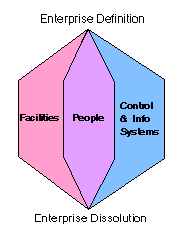
In fact, each of the three models has an interface with the other two, so the PERA diagram might actually be better represented as "wrapped around" a sphere. Unfortunately, this is difficult to represent on a two dimensional page.
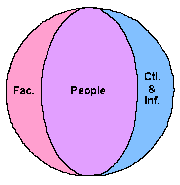
The Enterprise Lifecycle Model is comprised of three types of model:
|
In fact, each of the three models has an interface with the other two, so the PERA diagram might actually be better represented as "wrapped around" a sphere. Unfortunately, this is difficult to represent on a two dimensional page. |
|
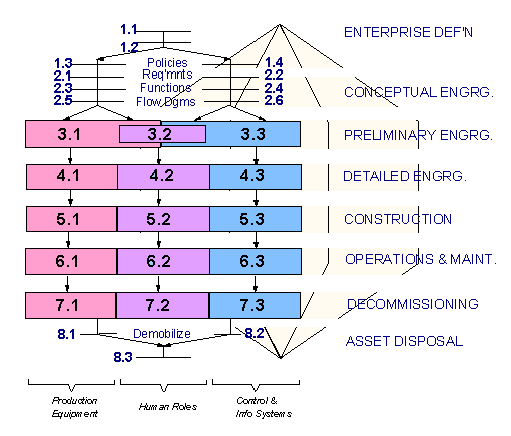
In the Lifecycle Model these are shown as three "columns".
Note that the pink, magenta, blue color coding of these models is maintained throughout PERA materials.
Next the enterprise is divided by "phase".
During each phase inputs and deliverables are exchanged between Facilities, People, and Systems. These Deliverables contain increasing detail during each phase as the enterprise lifecycle moves from Enterprise Definition to Enterprise Decommissioning (see diagram below).
PERA is a Type 2 GERAM
(General Enterprise Reference Architecture and Methodology).
Since it represents the full life cycle of the Enterprise, all existing Enterprise documents and tools may be fit within its structure.
As the Enterprise is developed, and increasing levels of detail are defined, PERA defines how "inputs" and "deliverables" are exchanged using swimlane and workflow diagrams.
Click here to learn more about Enterprise Integration in each Phase
The formats for documenting of each of the three models (Facilities, People and Systems) may vary in different industries. However, the PERA model provides a coherent and consistent structure for any enterprise during each lifecycle phase.
For all three models, additional detail is added in each sucessive phase by building on the information defined in the previous phase. Sign-off by all stakeholders at the end of each phase is fundamental to MoC (Management of Change).
For more discussion of the concept of Enterprise Architectures, see "What is an Enterprise Architecture".